
- Published 19/01/2026
Famous Cars From British TV and Film – Where Are They Now?
Some cars become as famous as the actors who drove them. From Del Boy's yellow three-wheeler to James Bond's gadget-laden Aston Martin, British screens have given us iconic vehicles that defined generations. But what happens to these celebrity cars when the cameras stop rolling? The answers range from museum glory to surprising obscurity.
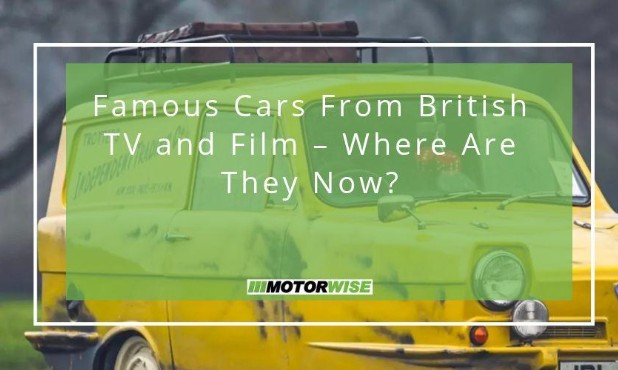
Only Fools and Horses: The Reliant Regal
Few vehicles are more instantly recognisable than the yellow Reliant Regal Supervan III driven by Del Boy and Rodney. The three-wheeled icon became synonymous with the Trotters' dodgy dealings and eternal optimism. But here's a secret the BBC kept quiet for years: there wasn't just one.
Production actually used multiple Reliants over the show's run, with vehicles frequently breaking down, being damaged during filming, or simply wearing out. The surviving original vehicles have become incredibly valuable, with authenticated examples selling for over £40,000 at auction – remarkable for a car that was essentially worthless when the show began filming in 1981.
Several Reliant Regals used in filming now reside in private collections, while others appear at classic car shows. The irony isn't lost on fans: a vehicle that represented the Trotters' poverty is now worth more than most modern cars. Del Boy would definitely see an opportunity there.
The Italian Job: The Original Minis
The 1969 Italian Job turned the humble Mini Cooper S into a global icon. Those red, white, and blue Minis tearing through Turin's streets, down staircases, and across rooftops created images that still define British motoring cool more than fifty years later.
The production used around thirty Minis, most of which were destroyed during filming – those roof jumps and sewer chases took their toll. Of the survivors, several have been meticulously restored and now command extraordinary prices. An authenticated Italian Job Mini sold for over £30,000 in recent years, despite being a model that originally cost under £700.
The film's influence extended far beyond the original cars. It sparked a cottage industry of replicas and tributes, with owners recreating the iconic livery on modern Minis. BMW, who now own the Mini brand, have leaned heavily into this heritage with special Italian Job editions over the years.
Mr Bean: The Cursed Mini
Rowan Atkinson's Mr Bean drove a distinctive citron green Mini with a matte black bonnet – a colour combination that became instantly recognisable worldwide. The character's relationship with his car, including the padlock security system, created comedy gold that transcended language barriers.
Like Only Fools, production used multiple vehicles. The main car was a 1976 British Leyland Mini 1000, though various examples appeared throughout the series and films. Several suffered significant damage during stunts, and at least one was written off entirely during production.
The surviving Mr Bean Minis have scattered to various fates. Some sit in private collections, others have been displayed at exhibitions, and at least one authenticated example sold at auction for over £50,000. The matte black bonnet, originally a budget necessity to avoid reflection issues during filming, became an iconic design element that fans still replicate today.
James Bond: The Aston Martin DB5
The most famous film car of all time first appeared in Goldfinger in 1964 and has returned repeatedly throughout the Bond franchise. The gadget-equipped Aston Martin DB5 defined automotive cool for generations and established a relationship between Bond and Aston Martin that continues today.
The original Goldfinger cars have had eventful lives. One was stolen in 1997 from a Florida aircraft hangar and has never been recovered – it remains one of the most wanted stolen vehicles in the world, valued at over £20 million. Another sold at auction in 2019 for £5.2 million, making it one of the most expensive British cars ever sold.
Aston Martin eventually capitalised on the connection by producing 25 Goldfinger DB5 'continuation' cars in 2020, complete with working gadgets including simulated machine guns and revolving number plates. At £2.75 million each, they sold out immediately. The Bond connection transformed a beautiful but otherwise vintage car into something approaching priceless cultural property.
Fawlty Towers: The Austin 1100
Not all TV cars achieved glamorous afterlives. The red Austin 1100 Countryman that Basil Fawlty famously attacked with a tree branch in 'Gourmet Night' met a rather more ordinary fate. After filming one of British comedy's most memorable scenes, the car was simply returned to the hire company.
What happened next remains unclear. The Austin 1100 was already an ageing, unfashionable model by 1979 when the episode aired. Without documentation proving its television history, it likely lived out its days as anonymous transport before eventually being scrapped like thousands of its siblings.
This highlights an important truth: not every screen car becomes a collector's piece. Without paperwork, photographs, or other authentication, a famous vehicle is just another old car. Somewhere in Britain, there might be a scrapyard that unknowingly crushed television history – though hopefully not while an angry hotel owner was still beating it.
The Sweeney: The Ford Consul GT
Before every police show used BMWs and Audis, The Sweeney's Ford Consul GT and Granada defined 1970s cop car cool. These brown and bronze Fords tearing through London streets influenced a generation's perception of plain-clothes policing.
The production cars were working vehicles that accumulated serious mileage during four series of filming. Most were simply worn out by the end of production. Unlike American shows that preserved hero cars, British television in the 1970s took a more pragmatic approach – when a car was finished, it was finished.
Today, any Sweeney-era Ford with documented production history would be valuable, but authenticated examples are virtually non-existent. The cars that defined British television crime drama likely met the same fate as the criminals Regan and Carter pursued – eventually caught up with by time and circumstance.
The Lesson for Car Owners
These stories illustrate how unpredictable a car's fate can be. A vehicle that seems ordinary today might become culturally significant tomorrow – or might simply rust away unnoticed. The difference often comes down to documentation and preservation.
For most of us, our cars won't achieve screen fame. But every vehicle has its own history – the family holidays, the daily commutes, the memories made. When the time comes to say goodbye, that history doesn't need a film credit to have mattered. Though if your car ever did appear on television, it might be worth checking before you call for collection.
